Login
Register

Kaaren Hilsen, CEO of Telenor's AI Factory, shares why she started small with GPU investments and is partnering with customers to build an architecture that gives sustainability, sovereignty and security an equal billing.
 Joanne Taaffe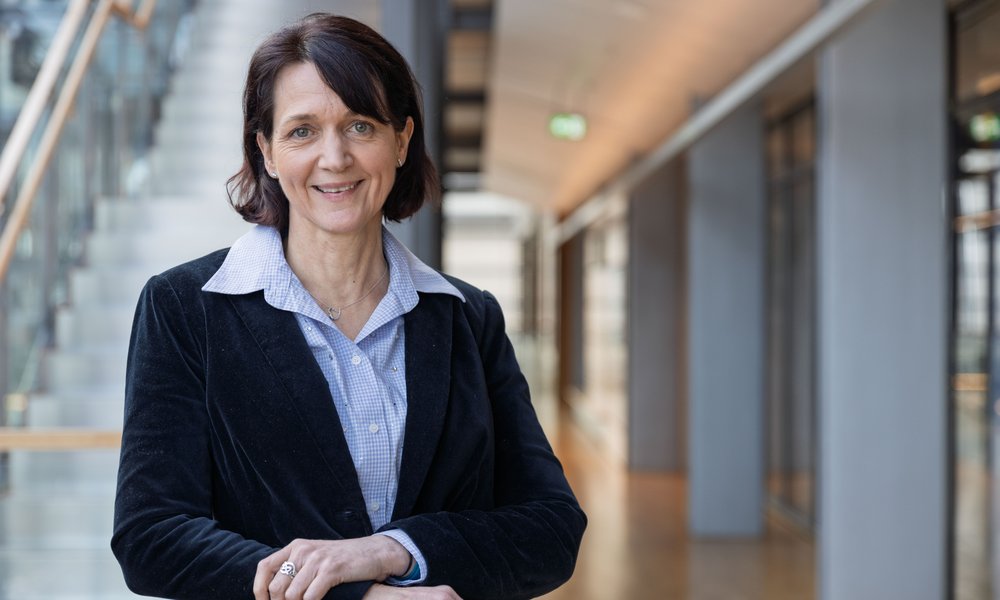
Telenor AI factory partners with customers on sustainable architecture
Throughout her career Kaaren Hilsen has taken on leadership roles where she has had to learn quickly and enact significant change, whether as CEO of Nordic Towers, CEO and CFO of Telenor Sweden, or CEO of Telenor Montenegro. With all this experience it is perhaps no surprise she was named CEO of Telenor’s AI Factory. But at a time when many telcos are talking much more loudly about AI than sustainability, it was her commitment to the environment that helped secure her the role.
“I was so passionate about how sustainability must be integrated into everything we do, that I was given the task. I was basically given a press release and a vision for a Telco AI Factory and asked to make it happen,” Hilsen tells TM Forum Insight.
Hilsen sees AI and data centers currently adding to climate issues rather than solving them: “If you look at data center emissions now, they’re higher than the airline industry. If we don't start putting sustainability on the agenda when we talk about AI or data centers, then there's something fundamentally wrong,” she says.
Hilsen is fortunate to be in Norway, where climate and environmental considerations have a minimum of thirty percent weighting in public tender processes.
She points out that “if we want to sell the AI infrastructure services to the public sector, we have to have sustainability on the agenda.”
Telenor’s AI Factory therefore has to meet three equally important criteria: sovereignty, security and sustainability. “We have to have all three ‘Ss’,” says Hilsen, with sustainability initiatives that include using solely renewable energy to power data centers, and recycling the heat they produce in the local community.
Starting small, aiming high
There is a fourth ‘S’’, which is also critical, and that is scale. Here again, Hilsen is doing things differently: “You see a lot of AI factory announcements for hundreds, even thousands of GPUs. We started small and bought a small cluster of 64 GPUs,” she explains.
Hilsen admits that such a small start has been greeted at times with amusement by the wider industry. But rather than a lack of ambition it reflects a desire to move quickly with partners and customers on building a flexible architecture that guarantees security, sustainably and sovereignty.
Typically, “in the telco world ... if you set up a big project with governance, you tick all the boxes ... And then several months have gone and you haven’t even got started,” says Hilsen.
Instead, she leads a start-up model and a team of five who work directly with technology partners and customers. Nvidia is a foundational partner, which in addition to supplying its GPUs and the NVIDIA AI Enterprise software platform, has worked closely with Telenor to optimize how to use the GPUs most efficiently, says Hilsen. Customers also play an important role. Initial customers include Telenor, and Capgemini, which is using the AI Factory for a language tool called BabelSpeak. All the tenants are running pilots, which allows them to experiment with AI use cases while Telenor adjusts and perfects its AI architecture.
“Technology is moving at such a speed, there is so much we need to learn,” explains Hilsen.
Since launching in November 2024, the AI Factory has acquired ten tenants and is now adding a further 248 GPUs. The future funding of infrastructure, however, will be linked to demand.
“We have got this year and next year to really start bringing in the revenues and prove that the market and demand for sovereign, secure and sustainable AI infrastructure is there,” says Hilsen.
In the meantime, the team benefits from links to Telenor, which both uses the factory’s secure AI computing infrastructure to develop network innovation and provides expertise within infrastructure and security.
While large telcos like Telenor may not move at start-up speed, Hilsen believes that their decades’ experience of architecting secure, defendable infrastructures for regulated national markets makes them well placed to develop and provide sovereign AI computing resources for others.
Safety in numbers
One of the first challenges Hilsen’s team has addressed is how to build a secure multi-tenant architecture, drawing on technology and customer partnerships, as well as Telenor’s security architecture expertise.
“The multi-tenancy element is one that I’m really proud of working with partners to set up,” says Hilsen. “We’ve been learning what is a real, secure multi-tenant solution [where] one customer can run workloads and release the GPU ... so another customer can go and use it securely.”
“To ensure we move at speed, it is crucial that we leverage partners in the ecosystem., Technology is changing at such speed, it is important that we do not get left behind,” explains Hilsen, adding: “This is why we are very much co-creating and collaborating with [tenants].”
Border crossing
The AI Factory ensures that customers’ data is processed and stored in Norway. But managing the secure, sovereign usage of both dozens of AI models developed and hosted in clouds outside national borders, and GPU infrastructure is complex.
“Norwegian and even European Sovereignty is hard because the world is dominated by players outside Europe, and if you look back just over the last year at what has happened in the geopolitical situation sovereignty and security often become an emotion rather than a business rationale,” she adds.
Hilsen is clear that “we are not competing with the big US companies, we are offering an alternative to on prem solutions.”
Indeed, she believes that rather than try to guess the future geopolitics and advances in technology, “we have to adapt, we have to iterate, we have to continuously pivot quickly and change to ensure we stay ahead whilst still having security and sustainability high on the agenda.”